Guide to Food Manufacturing: Processes, Trends, Safety, and Practical Resources
Food manufacturing refers to the industrial process of transforming raw agricultural products and ingredients into consumable food products at scale. It includes everything from minimal processing, such as washing and packaging fresh produce, to highly engineered procedures like thermal processing, extrusion, fermentation, and packaging of complex foods.
The food manufacturing industry exists to provide consistent, safe, and affordable food supplies to a large and growing global population. As consumption patterns evolve and demand increases, manufacturers work to produce stable, shelf-safe, nutritious products while managing cost, quality, and safety.
This field encompasses numerous sub-sectors — dairy processing, meat and poultry products, baked goods, snack foods, beverages, infant foods, ready-to-eat meals, and specialized ingredients. Food manufacturing integrates science, engineering, logistics, quality control, and regulatory compliance in day-to-day operations.
Importance
Food manufacturing matters today because it plays a central role in feeding billions of people efficiently and safely. It affects consumers, farmers, retailers, wholesalers, and the broader economy. By standardizing production, manufacturers reduce spoilage, extend shelf life, enforce food safety standards, and deliver consistent quality across regions and seasons.
Food security: The industry helps stabilize food availability, supporting communities irrespective of local growing seasons or agricultural output variations.
Public health: Manufacturing processes can enhance food safety by controlling contamination risks, sterilizing products, and maintaining nutritional profiles.
Economic value: It contributes significantly to employment, trade, technology development, and GDP in many countries.
Innovation: Advances in processing, packaging, and preservation constantly evolve to meet consumer demand for convenience, health, and sustainability.
As diets change with urbanization and lifestyle trends, food manufacturing must solve issues like waste reduction, nutritional improvement, safety assurance, and efficient distribution.
Recent Updates
Over the past year (2024–2025), several developments have emerged in food manufacturing:
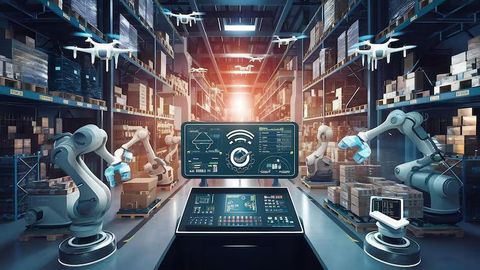
Automation and robotics: Manufacturing facilities are increasingly integrating automation to improve accuracy, reduce manual errors, and support continuous operations. Robotics are used for sorting, packaging, quality inspection, and palletizing.
Digital traceability: Blockchain, QR code systems, and sensor networks allow better tracking of ingredients from farm to shelf, improving transparency and recall responses when needed.
Health-focused products: Manufacturers are responding to consumer demand for fortified, minimally processed, plant-based, or functional foods with cleaner labels and added nutritional benefits.
Sustainable packaging: There is a growing shift toward recyclable, compostable, and reduced-plastic packaging solutions. Manufacturers explore material innovation alongside waste reduction strategies.
Food safety technologies: Rapid pathogen detection systems, real-time monitoring of critical control points, and predictive analytical tools are enhancing safety verification in processing lines.
These trends reflect an industry adapting to technological advancements, consumer preferences, and public health priorities.
Laws or Policies
Food manufacturing is heavily regulated to ensure consumer protection, quality, and safety. Regulations vary by country but share common elements:
Food safety and hygiene standards: Agencies like the U.S. Food and Drug Administration (FDA), European Food Safety Authority (EFSA), and others enforce rules covering facility sanitation, ingredient sourcing, allergen controls, processing conditions, and contamination prevention.
Labeling requirements: Manufacturers must disclose ingredient lists, nutritional information, allergen warnings, and country of origin in ways that are truthful and informative to consumers.
Hazard analysis and critical control points (HACCP): Many jurisdictions require implementing HACCP systems to identify, monitor, and control food safety hazards in production.
Good Manufacturing Practices (GMP): These guidelines cover personnel hygiene, equipment maintenance, facility design, and handling protocols to safeguard product safety.
Environmental regulations: Waste management, emissions, effluent discharge, and packaging materials may be governed by environmental protection rules to minimize pollution and resource depletion.
Complying with these standards ensures that food manufactured reaches consumers safely and aligns with public health goals.
Tools and Resources
Several tools and resources support efficient, safe, and compliant food manufacturing operations:
-
Process control software — for monitoring temperatures, timings, and critical parameters
-
Quality management systems (QMS) — documentation and tracking of quality checks
-
HACCP planning templates — systematic hazard analysis frameworks
-
Supplier evaluation checklists — to ensure raw material quality and traceability
-
Sanitation standard operating procedures (SSOPs) — guidelines for cleaning and hygiene
-
Equipment calibration tools — to verify accuracy of sensors and machines
-
Regulatory compliance databases — government portals for food safety rules
-
Packaging design and testing tools — for barrier performance and shelf life assessments
-
Waste management tools — mapping facilities’ waste streams and reduction strategies
-
Consumer feedback and analytics platforms — for understanding preferences and trends
These resources help food manufacturers manage complexity, ensure safety, and optimize performance across supply chains.
Table: Key Stages in Food Manufacturing
| Stage | Purpose | Example Activities |
|---|---|---|
| Raw material sourcing | Acquire safe, quality ingredients | Supplier audits, sampling, specification checks |
| Pre-processing | Prepare inputs for production | Washing, trimming, milling, blending |
| Processing & transformation | Convert ingredients into products | Cooking, baking, mixing, fermenting |
| Packaging | Protect product and provide information | Filling, sealing, labeling |
| Quality control | Verify safety and compliance | Microbial testing, chemical analysis |
| Storage & distribution | Maintain product during transit | Cold storage, logistics planning |
Table: Common Food Manufacturing Technologies
| Technology | Function | Benefit |
|---|---|---|
| Extrusion | High-speed shaping of dough and similar materials | Consistent texture, mass-production output |
| Canning / retort | Thermal processing for preservation | Extended shelf life |
| Ultrafiltration | Separating components by size (e.g., dairy) | Controlled composition, improved purity |
| High-pressure processing (HPP) | Cold non-thermal pasteurization | Nutritional/quality retention |
| Automated inspection | Vision systems to detect defects | Reduced errors, improved consistency |
| Modified atmosphere packaging (MAP) | Controls pack environment to slow spoilage | Longer freshness and quality |
FAQs
What is food manufacturing?
Food manufacturing is the industrial process of transforming raw agricultural products and ingredients into marketable food products, involving steps like processing, packaging, and quality control.
Why is food safety critical in manufacturing?
Because food products reach many consumers, and contamination can impact public health, safety systems ensure products are safe, consistent, and properly labeled.
How do manufacturers manage allergen risks?
Through strict segregation, cleaning, labeling, and verification protocols to prevent cross-contact and provide clear allergen information on labels.
What role does automation play in food manufacturing?
Automation improves efficiency, reduces manual errors, enhances precision in processing and packaging, and supports real-time monitoring.
How can sustainability be integrated into food manufacturing?
By adopting eco-friendly packaging, reducing waste and energy use, optimizing logistics, and using resource-efficient technologies.
Conclusion
Food manufacturing plays a vital role in modern society by transforming raw materials into safe, nutritious, and accessible food products at scale. With rapid developments in automation, digital traceability, product innovation, and sustainability, the industry continues to evolve to meet consumer demands and regulatory expectations. Regulatory frameworks, quality systems, and technological tools support safe and efficient production. For anyone involved in or studying food manufacturing, understanding the production stages, technologies, safety considerations, and emerging trends creates a foundation for informed, responsible engagement in this essential sector.