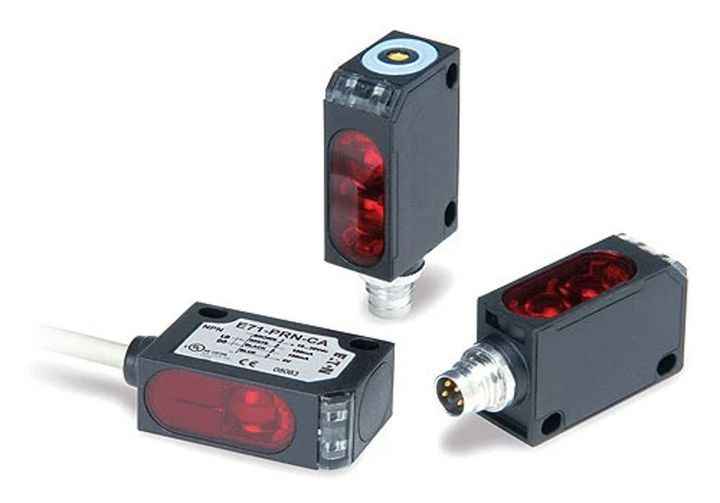
Guide to Wireless Industrial Sensors: Enhancing Efficiency in Remote Monitoring
In today’s industrial landscape, the shift toward automation and digitalization has transformed how businesses manage operations. One of the most impactful innovations in this transformation is the use of wireless industrial sensors. Unlike traditional wired sensors, wireless solutions enable remote monitoring, predictive maintenance, and seamless data transfer—reducing downtime and improving overall efficiency.
This guide explores the types of wireless industrial sensors, their applications, benefits, challenges, and the latest market trends that are reshaping industries worldwide.
Benefits of Wireless Industrial Sensors
Wireless sensors are at the heart of Industry 4.0 because they empower companies with greater flexibility and scalability.
-
Remote Monitoring – Enable real-time data collection in hard-to-reach or hazardous environments.
-
Reduced Installation Costs – No need for complex wiring, making deployment faster and cheaper.
-
Predictive Maintenance – Support data-driven maintenance, reducing unexpected downtime.
-
Scalability – Easier to expand sensor networks across facilities.
-
Improved Efficiency – Enhance decision-making with accurate, real-time insights.
Types of Wireless Industrial Sensors
Different types of sensors address diverse industrial needs:
-
Temperature Sensors – Monitor machinery heat levels to prevent overheating.
-
Vibration Sensors – Detect mechanical faults in rotating equipment.
-
Pressure Sensors – Track pressure in pipelines, hydraulics, and gas systems.
-
Proximity Sensors – Automate positioning, assembly, and safety operations.
-
Humidity Sensors – Ensure environmental conditions for sensitive materials.
-
Gas Sensors – Monitor emissions and workplace safety compliance.
Applications of Wireless Industrial Sensors
Wireless sensors are widely adopted across industries:
-
Manufacturing – Predictive maintenance for machinery and robotics.
-
Oil & Gas – Remote pipeline and facility monitoring in harsh conditions.
-
Energy & Utilities – Smart grids, power plants, and renewable energy sites.
-
Healthcare & Pharma – Monitor lab conditions and medical equipment.
-
Logistics & Warehousing – Track asset location, environment, and efficiency.
Wireless Industrial Sensors Market Trends
The global industrial sensor market is experiencing rapid growth due to:
-
IoT & IIoT Adoption – Integration with cloud platforms for real-time analytics.
-
5G Connectivity – Faster and more reliable wireless communication.
-
AI & Machine Learning – Advanced data analysis for predictive insights.
-
Edge Computing – Processing data closer to sensors for low-latency applications.
-
Sustainability – Energy-efficient sensors reducing industrial energy waste.
Comparison Table: Wired vs. Wireless Industrial Sensors
| Feature | Wired Sensors | Wireless Sensors |
|---|---|---|
| Installation Cost | High due to cabling | Lower, no wiring needed |
| Flexibility | Limited by wiring | Highly flexible and scalable |
| Maintenance | Frequent cabling issues | Battery replacement needed |
| Mobility | Fixed in place | Easy relocation |
| Remote Monitoring | Limited | Fully supported |
Challenges and Considerations
While wireless industrial sensors offer significant benefits, businesses must address certain challenges:
-
Battery Life – Frequent replacement or energy harvesting required.
-
Signal Interference – Industrial environments may cause connectivity issues.
-
Data Security – Requires strong encryption and secure networks.
-
Integration Costs – Legacy systems may need upgrades to support wireless IoT.
How to Choose the Right Wireless Industrial Sensor
-
Define your operational requirements (temperature, vibration, gas, etc.).
-
Consider the connectivity standard (Wi-Fi, Bluetooth, LoRaWAN, 5G).
-
Assess power management solutions for longer battery life.
-
Ensure compatibility with existing systems and IIoT platforms.
-
Prioritize cybersecurity features to protect sensitive industrial data.
FAQs on Wireless Industrial Sensors
Q1. What industries benefit most from wireless industrial sensors?
Manufacturing, oil & gas, energy, logistics, and healthcare benefit significantly from wireless sensor deployments.
Q2. Are wireless industrial sensors reliable in harsh environments?
Yes. Many are designed with rugged enclosures and built for extreme conditions.
Q3. How do wireless sensors support predictive maintenance?
They collect real-time equipment data, which is analyzed by AI/ML tools to forecast potential failures before they happen.
Q4. What communication protocols are commonly used?
Common protocols include Wi-Fi, Zigbee, Bluetooth, LoRaWAN, and 5G for long-range industrial applications.
Q5. Do wireless sensors reduce operational costs?
Yes. By reducing downtime, preventing failures, and cutting wiring expenses, they lower long-term operational costs.
Practical Checklist for Businesses
-
Identify equipment or processes needing monitoring.
-
Select appropriate sensor types for your industry.
-
Choose connectivity protocol (Wi-Fi, LoRa, 5G).
-
Plan integration with IoT/SCADA platforms.
-
Implement cybersecurity measures.
-
Monitor ROI and scalability.
Conclusion
Wireless industrial sensors are a cornerstone of smart manufacturing and predictive maintenance. They not only enhance efficiency but also provide businesses with the flexibility to adapt in dynamic environments. As connectivity, AI, and IoT continue to evolve, the role of wireless sensors will only expand, making them an essential part of the modern industrial ecosystem.