Guide to Chocolate Coating Machines: Technology, Processing, and Industry Overview
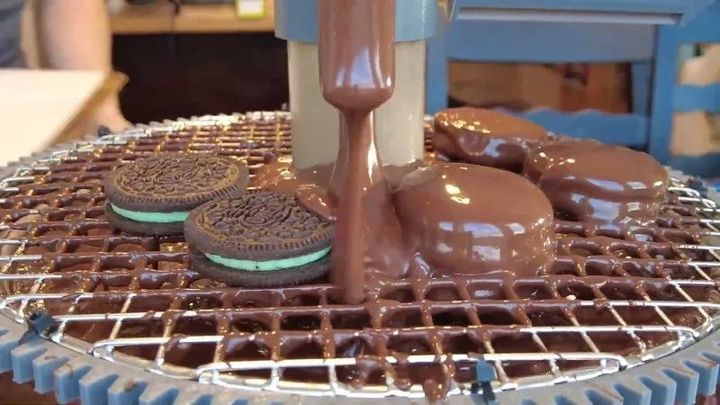
Chocolate coating machines are specialized food processing systems designed to apply a uniform layer of chocolate over various products such as biscuits, wafers, nuts, fruits, and confectionery centers. The coating process enhances taste, texture, and appearance while also providing a protective outer layer.
These machines were developed to replace manual coating methods, which were inconsistent and difficult to control at scale. As confectionery production expanded, the need for precise temperature control, uniform coating thickness, and hygienic handling led to the adoption of mechanized chocolate coating systems.
Today, chocolate coating machines are an essential part of confectionery and bakery processing environments, supporting consistent product quality and controlled chocolate application.
Importance of Chocolate Coating Machines in Food Processing
Chocolate coating machines play a vital role in maintaining consistency and quality across chocolate-coated products. The coating process directly influences texture, visual appeal, and shelf stability.
Their importance can be understood through the following aspects:
-
Uniform coating: Controlled application ensures even chocolate distribution.
-
Product protection: The chocolate layer acts as a barrier against moisture and air.
-
Hygiene control: Automated systems limit manual contact with food products.
-
Process efficiency: Continuous coating supports stable production flow.
These machines impact confectionery processors, quality teams, and food production facilities by enabling standardized and repeatable coating results.
Recent Developments and Industry Trends
Over the past year, chocolate coating machine technology has advanced with a focus on precision, automation, and adaptability.
During 2024 and early 2025, many production facilities introduced servo-controlled enrobing systems that allow precise adjustment of coating thickness and belt speed. This development improves consistency across products with varying shapes and sizes.
Another noticeable trend is the growing adoption of temperature-stabilized chocolate circulation systems. These systems help maintain chocolate viscosity and flow stability throughout extended production runs.
There has also been increased emphasis on flexible coating lines, allowing processors to switch between dark, milk, and compound chocolate with minimal process interruption. This supports product variety within the same facility.
Regulatory and Policy Considerations
Chocolate coating machines are governed by food safety regulations, hygiene standards, and industrial equipment guidelines. These frameworks ensure consumer safety and proper handling of food products.
Key regulatory considerations include:
-
Food hygiene standards: Requirements for cleanable surfaces and sanitary design.
-
Food contact material regulations: Rules governing materials that come into contact with chocolate.
-
Equipment safety guidelines: Standards for guarding, emergency stops, and operational safety.
-
Environmental policies: Guidelines related to waste chocolate handling and cleaning processes.
Compliance with these policies helps ensure safe, reliable, and consistent chocolate coating operations.
Main Types of Chocolate Coating Machines
Chocolate coating machines are available in different configurations based on product type and coating requirements. Each type supports a specific coating method.
| Machine Type | Coating Method | Typical Application |
|---|---|---|
| Enrobing Machine | Continuous curtain coating | Biscuits and wafers |
| Panning Machine | Rotational coating | Nuts and centers |
| Bottom Coating Machine | Base layer coating | Bakery items |
| Double Coating System | Multiple coating layers | Premium confectionery |
| Cooling Tunnel Integrated System | Coating with controlled cooling | High-volume processing |
Understanding these machine types helps align coating systems with production needs.
Tools and Resources Supporting Chocolate Coating Operations
Efficient chocolate coating relies on supporting tools and monitoring systems that maintain stability and quality throughout the process.
-
Temperature monitoring devices: Ensures chocolate remains within optimal range.
-
Viscosity measurement tools: Helps maintain consistent chocolate flow.
-
Belt speed controllers: Supports uniform coating thickness.
-
Process control panels: Allows adjustment of coating parameters.
-
Cleaning and sanitation tracking tools: Supports hygiene compliance.
These tools contribute to smooth coating operations and consistent product appearance.
Operational Challenges in Chocolate Coating
Chocolate coating processes involve several technical challenges that require careful control and monitoring.
-
Temperature fluctuations: Variations can affect chocolate texture and finish.
-
Uneven coating thickness: Improper flow control may cause inconsistencies.
-
Product alignment issues: Misalignment affects coating coverage.
-
Environmental sensitivity: Humidity and ambient temperature influence chocolate behavior.
Managing these challenges requires stable machine settings, regular monitoring, and controlled processing conditions.
Overview of the Chocolate Coating Process
A typical chocolate coating workflow follows a structured sequence to ensure consistent results.
-
Product feeding and spacing
-
Chocolate melting and circulation
-
Coating application
-
Excess chocolate removal
-
Cooling and setting
Each stage influences the final texture, appearance, and stability of the coated product.
Frequently Asked Questions
What is the main function of chocolate coating machines?
They apply a controlled and uniform layer of chocolate to food products.
Do chocolate coating machines handle different product shapes?
Many systems are designed to process various shapes with appropriate configuration.
Why is temperature control important during coating?
Temperature affects chocolate flow, adhesion, and final surface finish.
What types of chocolate can be used in coating machines?
Common types include dark, milk, white, and compound chocolate.
How does automation improve chocolate coating consistency?
Automation improves control over flow, speed, and temperature, resulting in uniform coating.
Table: Factors Influencing Chocolate Coating Quality
| Factor | Impact on Coating |
|---|---|
| Chocolate Temperature | Affects flow and finish |
| Product Size Uniformity | Influences coverage |
| Belt Speed | Determines coating thickness |
| Cooling Control | Affects setting quality |
| Equipment Cleanliness | Impacts hygiene |
Conclusion
Chocolate coating machines are a key component of modern confectionery and bakery processing systems. They support uniform coating, hygienic handling, and consistent product quality across a wide range of applications.
Recent developments show a clear move toward improved automation, temperature stability, and flexible processing lines. By understanding machine types, regulatory influences, and operational considerations, stakeholders can better manage chocolate coating processes in evolving food production environments.