How to Choose the Right Packaging Machinery Manufacturers for Your Business
Selecting reliable packaging machinery manufacturers is a critical investment that directly impacts your production speed, product safety, and operational profitability. Modern industrial facilities rely on automated equipment to minimize manual labor costs, reduce material waste, and maintain strict compliance across global supply chains.
Industrial production lines depend heavily on specialized engineering firms to design, fabricate, and integrate automated packaging equipment. As consumer demand shifts toward sustainable materials and faster delivery cycles, businesses must partner with commercial packaging machinery suppliers that offer scalable, high-speed solutions. A well-engineered packaging line protects goods from contamination, prevents transit damage, and ensures consistent shelf presentation across retail and wholesale distribution channels.
When evaluating potential equipment partners, procurement managers look beyond basic assembly capabilities. Leading manufacturers provide comprehensive turnkey systems that integrate seamlessly with existing conveyor networks, enterprise resource planning software, and quality inspection sensors. Investing in precision-built machinery reduces unscheduled downtime and delivers a measurable return on investment through improved throughput and lower per-unit packaging costs.
Core Categories of Industrial Packaging Machines
Different industries require distinct mechanical processes to contain, seal, and prepare goods for shipment. Understanding the primary categories of commercial packaging machinery helps buyers identify suppliers with the right technical specialization.
Filling and Dosing Equipment
Filling machines accurately measure and dispense liquids, powders, granules, or viscous pastes into primary containers such as bottles, pouches, and jars. Volumetric piston fillers, auger fillers, and net-weight gravimetric systems ensure strict adherence to net-content regulations while preventing costly product giveaway. High-precision dosing is especially vital in pharmaceutical, nutraceutical, and specialty chemical manufacturing where exact formulation ratios are mandatory.
Form-Fill-Seal Systems
Vertical and horizontal form-fill-seal machines streamline production by creating bags or pouches directly from flat rolls of packaging film, filling them with product, and heat-sealing them in one continuous motion. These automated systems are widely favored by snack food producers, coffee roasters, and agricultural suppliers due to their compact footprint and high cycle speeds. Modern units feature rapid changeover capabilities that allow operators to switch between different bag sizes and film laminates with minimal downtime.
Capping, Labeling, and Coding Machinery
Once containers are filled, secondary finishing equipment secures the package and applies essential tracking data. Automatic chuck cappers and induction sealers create tamper-evident closures that extend shelf life and prevent leaks during transport. Immediately downstream, high-speed pressure-sensitive labelers and continuous inkjet or laser coders print batch numbers, expiration dates, and scannable barcodes required for retail traceability.
End-of-Line Case Packing and Palletizing
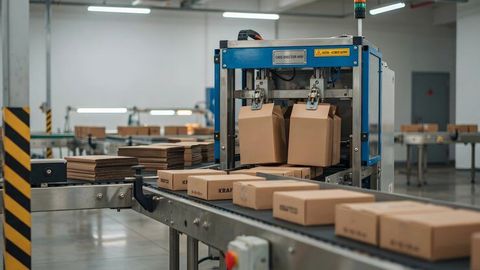
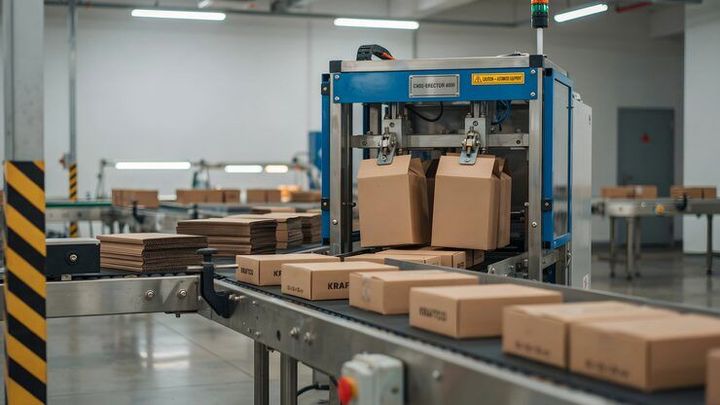
End-of-line automation prepares finished retail units for bulk warehousing and freight logistics. Robotic pick-and-place case packers load individual items into corrugated shipping cartons, which are then sealed with adhesive tape or hot-melt glue. Automated palletizers stack heavy cartons onto wooden or plastic pallets in stable interlocking patterns before stretch-wrapping machines secure the entire load for safe forklift handling.
Key Factors When Evaluating Commercial Packaging Machinery Suppliers
Choosing an equipment vendor requires thorough technical and financial due diligence to avoid costly integration bottlenecks. Procurement teams should assess prospective suppliers across several operational benchmarks before signing a capital equipment contract.
Engineering Customization and Scalability
Standard off-the-shelf machines rarely fit every facility layout or unique container geometry. Top-tier packaging machinery manufacturers employ in-house mechanical and electrical engineers capable of modifying frame dimensions, hopper capacities, and conveyor heights to match your floor plan. Modular machine architectures also allow businesses to start with semi-automatic workstations and upgrade to fully robotic lines as order volumes grow.
Regulatory Compliance and Sanitary Design
Facilities operating in food processing, beverage bottling, cosmetics, or medical device manufacturing must meet strict hygiene and safety standards. Equipment built with washdown-rated stainless steel frames, food-grade seals, and crevice-free surfaces prevents bacterial harborage and simplifies sanitation protocols. Buyers should verify that machinery designs comply with relevant international safety directives, electrical codes, and cleanroom certifications applicable to their target markets.
After-Sales Support and Spare Parts Availability
Even the most robust industrial equipment requires routine preventive maintenance and occasional component replacement. Evaluating a manufacturer's post-installation service network is just as important as reviewing technical specifications. Reliable suppliers maintain domestic spare parts inventories, offer remote diagnostic troubleshooting via programmable logic controllers, and provide comprehensive operator training to maximize overall equipment effectiveness.
Understanding Packaging Machine Cost and Return on Investment
Capital expenditure for commercial packaging equipment varies widely depending on automation levels, construction materials, and output speeds. Entry-level semi-automatic fillers or tabletop sealers typically require a modest upfront budget suitable for startups and small-batch producers. Conversely, fully integrated, high-speed automated packaging lines with vision inspection systems and robotic palletizers represent a major capital investment.
To calculate true return on investment, buyers must evaluate total cost of ownership rather than focusing solely on the initial purchase price. Energy consumption, compressed air requirements, changeover times, film waste rates, and maintenance labor all influence long-term operating expenses. Acquiring durable, energy-efficient machinery from established manufacturers often yields lower lifetime costs and higher resale value than purchasing low-cost imports with limited technical backing.
Future Trends in Automated Packaging Equipment
Technological innovation continues to reshape how packaging lines operate on the factory floor. Industrial Internet of Things connectivity now allows plant managers to monitor real-time machine performance, track predictive maintenance alerts, and analyze production bottlenecks from centralized dashboards. Artificial intelligence-driven vision systems automatically detect micro-leaks, misaligned labels, and seal defects at full line speed, ensuring flawed packages never reach consumers.
Sustainability mandates are also driving rapid mechanical redesigns across the sector. Manufacturers are engineering specialized sealing jaws and tension control systems capable of handling recyclable mono-material films, compostable bioplastics, and lightweight paperboard alternatives without tearing or jamming. Partnering with forward-thinking packaging machinery manufacturers ensures your facility remains adaptable to evolving environmental regulations and shifting market demands.
Disclaimer: The information provided in this article is for general informational and educational purposes only. While every effort is made to ensure accuracy regarding industrial equipment standards and procurement practices, specifications, regulatory requirements, and capital costs vary based on project scope and regional compliance laws. Readers should consult qualified industrial engineers and authorized equipment specialists before making capital purchasing decisions.