Heat Exchanger Manufacturers: Technology, Trends and Guide
Heat exchanger manufacturers design and produce equipment that transfers thermal energy between fluids. This guide explains technologies, industry trends, regulations, and useful resources.
Heat exchangers are engineered systems that transfer heat from one fluid or gas to another without normally allowing the two streams to mix. They are used wherever controlled heating or cooling is required, including chemical processing, power generation, refrigeration, HVAC, food processing, oil and gas, and industrial manufacturing.
Manufacturers typically develop different designs according to operating temperature, pressure, fluid properties, heat-transfer requirements, available space, and material compatibility.
Common types include:
- Shell and tube heat exchangers
- Plate and frame heat exchangers
- Air-cooled heat exchangers
- Finned tube heat exchangers
- Compact heat exchangers
- Condensers and evaporators
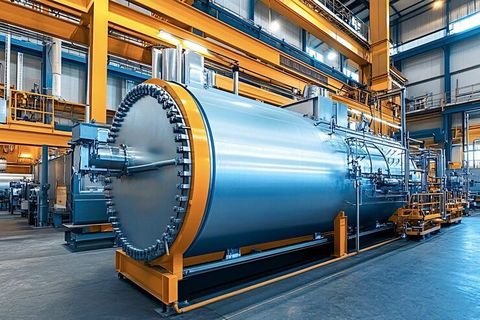
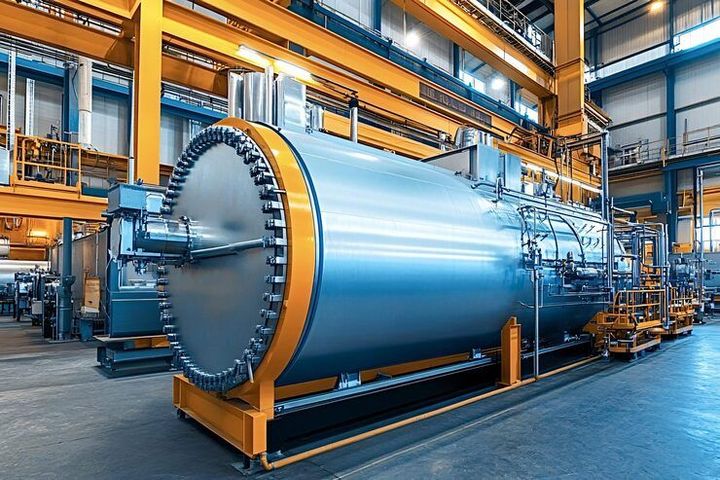
Shell-and-tube designs remain widely used in heavy process industries because they can handle demanding operating conditions.
Why Heat Exchanger Technology Matters
Efficient heat transfer can reduce unnecessary energy consumption and help industrial systems maintain stable operating temperatures.
The equipment affects several industries because thermal management is often an essential part of production. Chemical plants, refineries, power facilities, refrigeration systems, data centers, and HVAC installations all require controlled heat transfer.
For engineers, important selection factors include:
- Heat-transfer area
- Fluid temperature and pressure
- Material compatibility
- Corrosion resistance
- Fouling characteristics
- Maintenance requirements
- Space limitations
- Applicable design standards
India's heat exchanger market has continued expanding alongside industrial activity, infrastructure development, HVAC demand, power generation, and process manufacturing. A 2026 market analysis estimated India's 2025 market revenue at about USD 1.45 billion and projected continued growth through 2033.
Recent Industry Updates and Trends
During 2025 and 2026, heat exchanger technology has increasingly been connected with energy efficiency, compact thermal designs, industrial cooling, and data-center infrastructure.
One notable development is the growing attention to liquid cooling for high-density computing. Modern data centers require increasingly sophisticated thermal-management systems as computing loads rise.
Another trend is the use of digital monitoring. Temperature, pressure, flow, and fouling data can be tracked to identify changes in heat-transfer performance and support preventive maintenance.
Industry research published in 2026 also indicates increasing interest in plate-and-frame and finned-tube technologies alongside established shell-and-tube designs.
BIS documentation published in 2026 also lists work involving Indian standards for air-cooled heat exchangers and pressure-vessel-related standards, showing continued attention to technical standardization.
Laws, Standards, and Policies in India
Heat exchanger requirements depend on the equipment's application, pressure conditions, installation environment, and relationship with regulated pressure systems.
India's Boilers Act, 2025 replaced the earlier Boilers Act, 1923 and modernized the legislative framework for boilers and associated components. The Act covers specified boiler components exposed to pressure and establishes inspection and certification responsibilities.
In 2026, the government also issued an advisory concerning temporary extensions of certain boiler certificates for high-capacity industrial and power installations, subject to inspection and safety conditions.
Manufacturers and engineering teams may also need to consider relevant Indian Standards, pressure-vessel requirements, welding qualifications, material specifications, inspection procedures, and internationally recognized engineering codes where applicable.
Tools and Resources for Heat Exchanger Selection
Engineers and technical readers can use several categories of resources when evaluating heat exchanger designs:
- Heat-transfer calculation worksheets
- LMTD and effectiveness-NTU calculators
- Pressure-drop calculators
- Thermal-property databases
- Fouling-factor reference tables
- Material compatibility charts
- Equipment specification templates
- Engineering simulation software
- Indian Standards documentation
- Pressure-vessel design references
A basic heat-transfer calculation commonly considers heat duty, mass flow rate, specific heat, inlet and outlet temperatures, and the overall heat-transfer coefficient.
FAQs
What does a heat exchanger do?
A heat exchanger transfers thermal energy between two fluids or gases while keeping the streams separated by a heat-conducting surface.
Which heat exchanger type is widely used in industry?
Shell-and-tube heat exchangers are widely used across process industries. Plate-and-frame and air-cooled designs are also important for specific applications.
What materials are used for heat exchangers?
Common materials include carbon steel, stainless steel, copper alloys, titanium, and specialized alloys. Selection depends on temperature, pressure, corrosion, and fluid characteristics.
Why does fouling matter?
Fouling can reduce heat-transfer efficiency and increase pressure drop. Regular inspection and appropriate operating conditions can help manage its effects.
Are heat exchangers regulated in India?
Certain installations can fall under pressure-equipment, boiler, workplace-safety, environmental, or industry-specific requirements. The applicable rules depend on the equipment and its use.
Conclusion
Heat exchanger manufacturers play an important role in modern thermal engineering. Their equipment supports temperature control across manufacturing, energy, refrigeration, HVAC, chemical processing, and emerging data-center applications.
Current developments are emphasizing energy efficiency, compact designs, digital monitoring, advanced materials, and reliable pressure management. In India, evolving standards and the Boilers Act, 2025 further highlight the importance of appropriate engineering, inspection, and documentation.
Disclaimer:
This article is provided for general educational purposes. Technical requirements can vary by equipment, installation, industry, and jurisdiction. Qualified engineers and relevant regulatory authorities should be consulted for project-specific decisions.