Industrial Welding Machines and Robotic Automation Systems Guide
Investing in advanced industrial welding equipment and robotic welding systems enables manufacturing facilities to increase production throughput while reducing long-term operational labor costs. Procurement leaders evaluating automated welding cells and commercial power sources must balance upfront capital expenditure with precision, duty cycle performance, and seamless integration into existing assembly lines.
Selecting the right power architecture is the foundational step when upgrading a fabrication floor or expanding a heavy manufacturing plant. Modern inverter-based power supplies offer superior arc stability, energy efficiency, and digital programmability compared to older transformer-based units, directly impacting weld quality and consumable longevity.
Heavy-Duty MIG and Flux-Cored Welding Systems
Gas Metal Arc Welding (GMAW) and Flux-Cored Arc Welding (FCAW) remain the primary workhorses for high-deposition structural steel fabrication, automotive chassis assembly, and heavy equipment manufacturing. Commercial MIG welders engineered for continuous industrial duty cycles feature advanced waveform control that minimizes spatter and lowers post-weld cleanup expenses. Facility managers looking to buy industrial welding equipment in this category prioritize multi-process power sources capable of handling thick plate materials alongside high-speed wire feeding mechanisms.
Precision Industrial TIG Welding Machines
For aerospace components, medical device manufacturing, and sanitary stainless steel piping, Gas Tungsten Arc Welding (GTAW) provides unmatched arc control and metallurgical purity. Industrial TIG welding machines incorporate high-frequency arc starting, pulse width modulation, and digital memory channels to replicate exact weld parameters across repetitive production runs. Purchasing teams sourcing precision arc welding equipment often bundle these power sources with closed-loop water cooling systems to sustain high-amperage operations without thermal overload.
High-Speed Laser Welding Systems
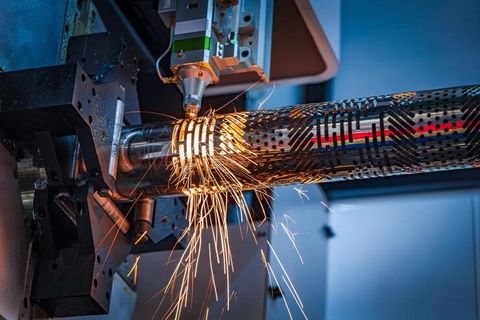
Fiber laser welding technology has rapidly gained adoption among tier-one automotive suppliers and battery manufacturers seeking minimal heat-affected zones and ultra-fast travel speeds. Unlike conventional arc processes, an industrial laser welding system delivers concentrated energy density capable of joining dissimilar metals and thin-gauge alloys with negligible thermal distortion. Although the initial capital equipment cost is substantially higher than traditional arc welders, the elimination of secondary straightening operations delivers a rapid return on investment.
Integrating Robotic Welding Systems and Automated Cells
Transitioning from manual torch operation to automated arc welding addresses skilled labor shortages while ensuring consistent bead geometry across multi-shift schedules. Commercial robotic integration spans from compact benchtop units for small job shops to multi-axis gantry systems designed for massive structural assemblies.
Six-Axis Articulated Industrial Welding Robots
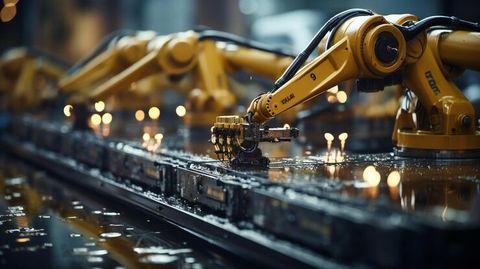
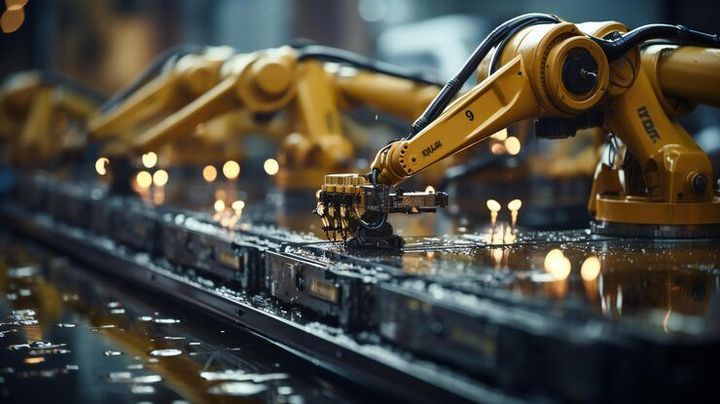
Traditional six-axis articulated robotic arms mounted inside enclosed safety cells represent the gold standard for high-volume, repeatable manufacturing. These automated welding cells integrate servo-controlled positioners, torch cleaning reamers, and seam-tracking laser sensors to maintain exact joint alignment despite minor part tolerances. Operations directors evaluating robotic welding system quotes must account for safety light curtains, fume extraction hoods, and specialized offline programming software licenses.
Collaborative Welding Robots for Flexible Job Shops
Collaborative welding robots, commonly referred to as cobots, allow small and medium-sized metal fabricators to automate low-volume, high-mix production runs without complex code writing. Equipped with force-torque sensors and intuitive hand-guided teaching interfaces, these systems enable experienced welders to program complex toolpaths within minutes. Because collaborative robots operate safely alongside human technicians at controlled speeds, they require a smaller floor footprint and lower installation overhead than caged industrial cells.
Commercial Procurement, Pricing, and Equipment Financing
Acquiring enterprise fabrication machinery involves evaluating total cost of ownership, maintenance contracts, and flexible capital deployment strategies. Industrial buyers rarely evaluate equipment solely on sticker price, instead focusing on warranty coverage, local technical support availability, and energy consumption metrics.
Capital Purchase Versus Commercial Equipment Leasing
Manufacturing enterprises frequently utilize Section 179 tax deductions, capital equipment loans, or operating leases to preserve working capital while upgrading shop floor technology. Equipment financing providers tailored to metalworking industries offer structured payment schedules that align monthly lease expenses with the immediate revenue generated by increased weld output. Requesting custom quotes from authorized industrial distributors often unlocks bundled pricing on shielding gas regulators, welding wire bulk drums, and preventative maintenance packages.
Evaluating Consumables, Fume Extraction, and Compliance
A complete welding station budget must incorporate ongoing consumable expenditures, personal protective equipment, and occupational safety compliance systems. Automated welding cells generate concentrated particulate emissions that require centralized downdraft tables or source-capture fume extraction arms to meet workplace air quality regulations. Standardized contact tips, ceramic nozzles, and heavy-duty welding curtains further protect capital assets and ensure uninterrupted production uptime across demanding industrial environments.
Disclaimer: The information provided in this article is for general informational and educational purposes only and does not constitute professional engineering, financial, tax, or procurement advice. Equipment specifications, pricing, and financing terms vary by supplier and operational requirements. Businesses should consult certified welding engineers, safety inspectors, and qualified financial advisors before purchasing or installing industrial machinery.